6-Piece Wooden Balance Beam & Stepping Stones for Kids
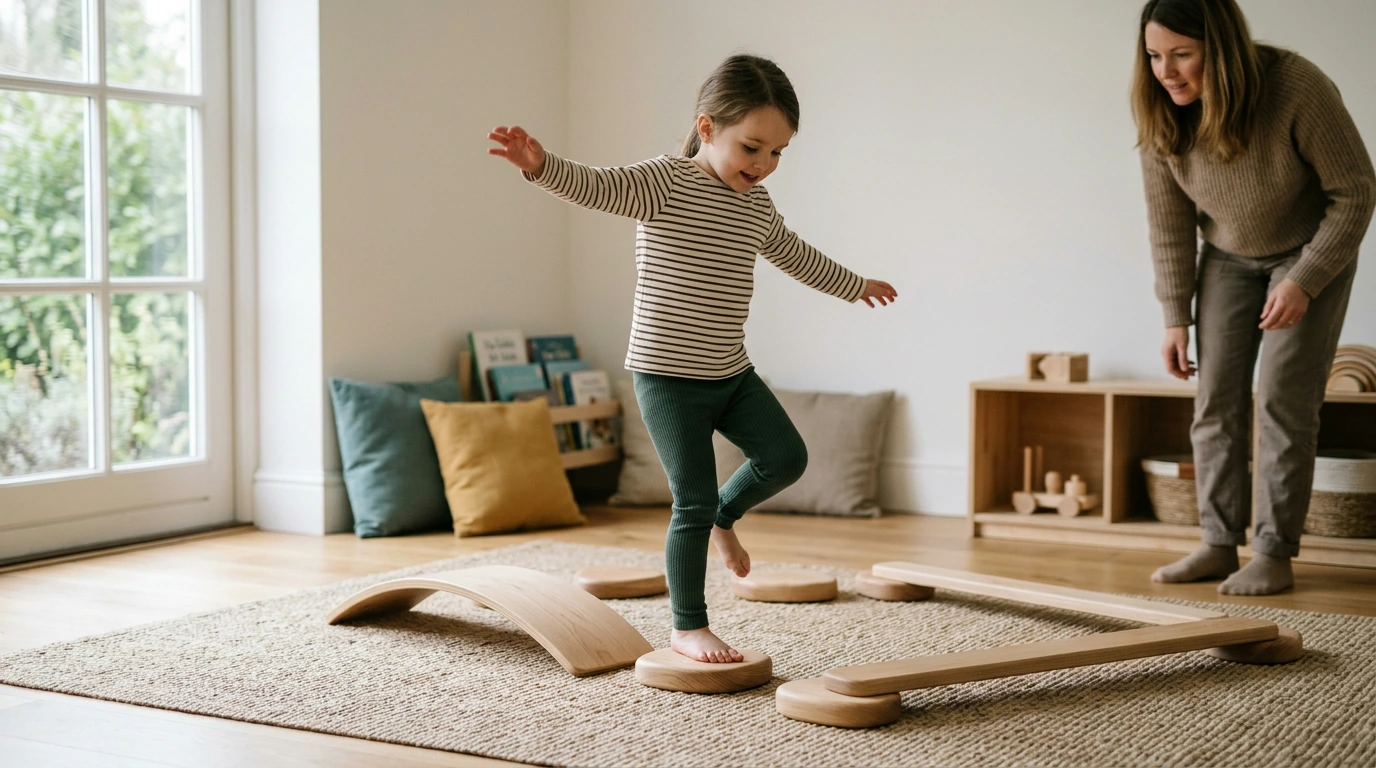
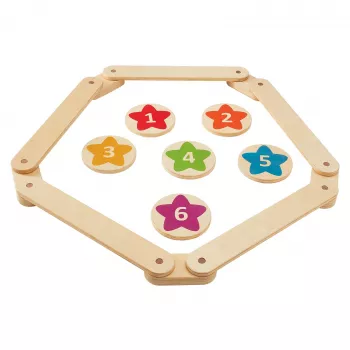
6PCS Kids Wooden Balance Beam & Stepping Stones: Indoor–Outdoor Balance Play Set
A wooden balance beam and stepping-stone set turns everyday play into a movement challenge that builds coordination, body awareness, and confidence. This 6-piece set is designed for flexible layouts—create straight paths, zigzags, or mini obstacle courses for active play at home, in a classroom, or outdoors. With quick reconfigurations, kids get a fresh challenge in minutes, whether they’re practicing careful steps solo or taking turns with friends.
What’s Included and How It Works
This set includes 6 wooden pieces that can be arranged into multiple layouts, letting you adjust the play experience to match a child’s age, comfort level, and energy. Use the pieces as a balance beam route, a stepping-stone trail, or combine them into a simple obstacle course that encourages problem-solving along with movement.
- 6 pieces to build different paths and challenges
- Works as a balance-beam line, stepping-stone trail, or a mixed route
- Fast to reset for new games: straight lines, curves, alternating steps, or “floor is lava” patterns
- Great for solo practice, sibling play, or small-group turn-taking
If you’re looking for the specific set featured here, see the 6PCS Kids Wooden Balance Beam & Stepping Stones.
Key Benefits for Growing Kids
Balance play is more than “burning energy.” It supports physical literacy—skills like stability, coordination, and controlled movement that transfer into sports, playground confidence, and everyday safety on stairs, curbs, and uneven ground. Organizations that focus on kids’ health consistently encourage active play as part of a healthy routine, including the CDC’s physical activity guidance, the American Academy of Pediatrics family fitness resources, and SHAPE America’s physical literacy tools.
- Balance and coordination: encourages controlled steps, stable posture, and safer landings
- Core strength and motor planning: promotes steady movement and intentional foot placement
- Focus and self-regulation: structured movement tasks can support attention and patience
- Confidence building: adjustable difficulty helps kids progress from simple steps to longer sequences
- Social play: easy group games like timed rounds, follow-the-leader, or pattern copying
Set-Up Ideas and Game Variations
The easiest way to keep kids engaged is to rotate the “rules” while keeping the materials the same. A few small layout changes can shift the challenge from pure balance to listening skills, memory, or turn-taking.
- Beginner path: place pieces in a straight line with small gaps; encourage slow, quiet steps
- Zigzag trail: angle each piece to practice changes of direction and weight shifting
- Color/shape calls: call out where to step next to practice listening and reaction time
- Obstacle course combo: add pillows, cones, or jump markers between pieces (leave ample space)
- Challenge rounds: count how many crossings can be completed with controlled steps (no rushing)
- Imaginative play: build “river crossings,” “mountain ridges,” or “animal tracks” routes
For a calmer variation, try “freeze balance”: kids pause for a three-count on each piece before moving to the next. For a more energetic option, add a gentle “mission” between pieces, like one jumping jack or a slow squat—only if the play area is clear and supervision is close.
Safety, Surfaces, and Supervision
Balance play should feel challenging but not chaotic. A stable setup and clear rules help kids take smart risks while reducing slips and collisions.
- Choose a stable, level surface; avoid uneven ground that can introduce unexpected wobble
- For indoor use, place on a non-slip rug or exercise mat to reduce sliding and soften slips
- Keep the play area clear of sharp edges and hard furniture corners; maintain a safety buffer zone
- Start with close supervision for younger children and first-time users; progress gradually
- Encourage barefoot or grippy socks indoors and secure, closed-toe shoes outdoors when needed
- Teach “one at a time” rules for narrow routes to prevent collisions
A simple rule that works well for groups: “Slow feet on the beam, fast feet on the floor.” Kids can move quickly between stations, then switch to careful steps on the path itself.
Quick Comparison: Ways to Use the 6 Pieces
Different layouts can target different skills—straight lines for stability, zigzags for turning control, and spaced steps for stride and rhythm.
| Layout | How to Arrange | Skills Practiced | Difficulty |
|---|---|---|---|
| Straight line | Pieces in a row with minimal gaps | Basic balance, steady pace | Easy |
| Wide steps | Increase spacing between pieces | Stride control, planning | Medium |
| Zigzag | Angle each piece left/right | Turning balance, weight shifts | Medium |
| Alternating pattern | Mix orientations or step targets | Rhythm, attention, coordination | Medium |
| Obstacle course | Combine with safe props and stations | Agility, endurance, rule-following | Medium–Hard |
Care and Storage Tips
When This Set Is a Great Fit
More In-Stock Picks to Round Out Playtime
If you’re building a well-rounded home setup, pairing movement play with creative or tech-friendly accessories can help keep routines flexible. Along with the 6PCS Kids Wooden Balance Beam & Stepping Stones, consider adding a desk-friendly option for older kids who like recording, streaming, or virtual lessons, such as the RGB USB Gaming Microphone with Noise Canceling & One-Touch Mute.
FAQ
What age is a wooden balance beam and stepping-stone set best for?
These sets are typically a great match for preschool through early elementary ages, with close supervision for younger children. Start with simple, low-gap layouts and increase distance or turns as skills improve.
Can this be used indoors without damaging floors?
Yes—placing the pieces on a non-slip rug or foam mat helps reduce sliding and protects flooring. Keep the bottoms clean and check for small debris (like grit) before play to avoid scratches.
How can the difficulty be adjusted as a child improves?
Increase spacing, add zigzags and turns, introduce step patterns (like “left foot only”), or time controlled rounds without rushing. You can also combine the path with gentle obstacles while keeping a clear safety zone and steady supervision.













Leave a comment