Instant Cabin Tents: How They Work and What to Know
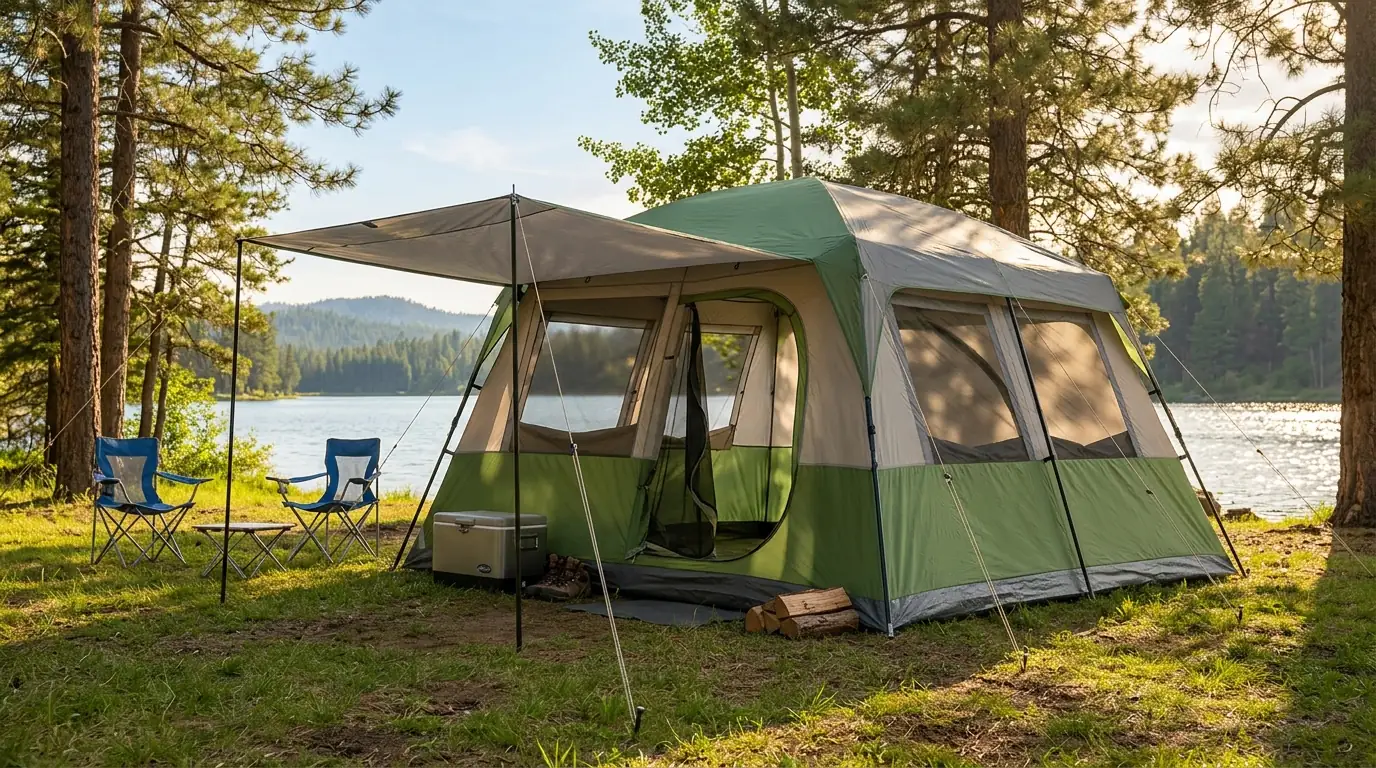
What Is an Instant Cabin Tent?
An instant cabin tent is a tent designed to open quickly using a frame that is already connected to the tent body. Instead of threading separate poles through sleeves, you extend the frame, lock its joints or hubs into place, and secure the tent. “Instant” describes the simplified setup—not a tent that requires no assembly or anchoring.
The cabin style usually has relatively straight walls and a broad floor plan. That shape can make the interior feel more open and provide useful headroom near the sides. Instant describes how the tent sets up; cabin describes its general shape. A tent can have one feature without having the other.
How does the setup work?
Many designs use preattached poles and a central hub or connected frame. You unfold the tent, extend the frame sections, and secure the corners and guy lines. The exact sequence varies, so follow the included instructions. Practicing at home helps you learn the locking points before you arrive at camp.
Fast setup can be especially convenient when you’re arriving late or setting up with limited help. Still, a larger tent may take more than one person to raise comfortably, and the frame can be bulky to carry. Compare packed dimensions and weight with the space available in your vehicle and the distance from your parking spot to camp.
What should you consider before choosing one?
Start with the number of campers and the gear you plan to keep inside. Check the floor dimensions and peak height, rather than relying on the capacity label alone. Straight walls can make the space feel roomier, but usable floor area still depends on the tent’s layout.
Next, consider expected weather. Look for a rainfly and well-covered seams if rain is likely, and use the included stakes and guy lines to secure the tent. Tall, broad-sided tents can catch wind, so choose a sheltered campsite and avoid using the tent in conditions beyond its stated limits. Mesh panels and vents can improve airflow; keep openings arranged as directed to help manage condensation and bugs.
For sunny trips, seek shade when choosing a campsite and check whether the tent’s materials provide stated UV protection. A quick-opening frame doesn’t automatically mean the tent blocks sunlight or handles storms well. For more help comparing roomy, quick-open designs, visit our guide to quick-open cabin tents.
FAQ
What should you look for in a cabin tent for sunny campsites?
Look for stated UV protection, good ventilation, and a design that lets you use shade effectively. A rainfly or other covering may add shade, but it can also reduce airflow, so consider both features together.












Leave a comment