Rechargeable Automatic Dog Ball Launcher: 3 Distances
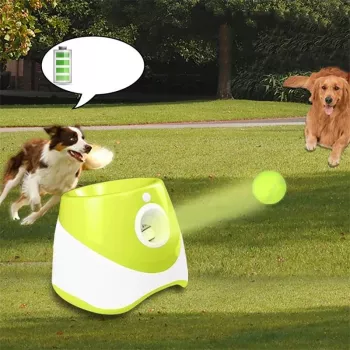
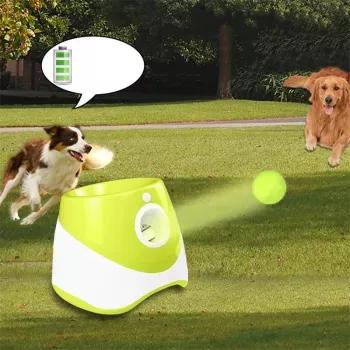
Automatic Dog Ball Launcher with Rechargeable Battery – 6 Balls, 3 Launch Distances
A good game of fetch burns energy, builds confidence, and helps turn “restless at home” into “relaxed on the couch.” Our team built this routine-friendly launcher around the details that make fetch easier to keep up with: a rechargeable battery (so you’re not constantly swapping disposables), six balls to keep the game moving, and three launch distances so you can match your space and your dog’s pace. For more guidance, see Best Ball Throwers for Dogs.
If you want to start more consistent play sessions—without needing a perfect schedule or a fresh throwing arm—this is the kind of tool that helps you show up for short, repeatable wins. For further reading, see The Do’s and Do nots Of Automatic Ball Launcher.
What This Launcher Solves in Everyday Play
- Keeps fetch moving when arms get tired or time is short—load, set distance, and keep the game consistent.
- Helps channel high energy into structured play, which can reduce boredom behaviors like pacing or chewing.
- Makes it easier to schedule short “mini sessions” throughout the day instead of relying on one long outing.
- Supports independent-style play with supervision, especially useful when weather limits outdoor time.
Structured fetch can be a practical part of your dog’s overall activity plan. For general exercise guidance and safety reminders, you can also reference the American Veterinary Medical Association (AVMA) exercise overview and the American Kennel Club (AKC) exercise tips.
Rechargeable Battery Convenience (No Constant Battery Swaps)
- Rechargeable design keeps fetch setup cleaner—no hunting for fresh disposable batteries before playtime.
- Better for routine play: charge it, store it near the leash and toys, and it’s ready for the next round.
- Helpful for travel or yard days: a rechargeable unit can be easier to manage than packing spare batteries.
- Tip for smoother days: plug in after play so it’s topped up for the next session.
One of the simplest ways to make fetch “stick” as a habit is removing friction. When the launcher is always ready to go, you’re more likely to fit in a few throws between meetings, after dinner, or during a quick backyard break.
Three Launch Distances: Match the Space and the Dog
- A single “one-distance” launcher can be limiting; three distance options make it easier to fit apartment living, hallways, backyards, and parks.
- Shorter throws can help with controlled indoor games (with clear lanes) and for dogs that are still learning the drop-and-return rhythm.
- Longer throws are ideal for outdoor energy burn, especially for athletic dogs that need a bigger run.
- Distance changes also help keep sessions interesting: alternate distances to reduce predictable sprint patterns and encourage focus.
Distance Settings: Practical Ways to Use Each Option
| Launch distance choice | Best place to use it | Good for | Session idea |
|---|---|---|---|
| Short | Indoors (clear hallway/room) or small patio | Training the return + drop, gentle warm-ups | 5–8 throws, then a sniff break |
| Medium | Backyard or quiet open area | Everyday exercise without over-sprinting | Two sets of 6 throws with water in between |
| Long | Large yard or open field | High-energy dogs that love a full run | 3–5 big sprints, then switch to medium |
A small but meaningful strategy: start each session at a shorter distance as a warm-up, then move longer only if your dog is returning cleanly and staying relaxed between throws. You’ll often get better behavior and fewer “wild loops” that can lead to slipping or awkward turns.
Six Included Balls: Keep the Game Flowing
- A multi-ball set helps prevent the “one lost ball ends the session” problem—especially outdoors.
- Rotating balls can reduce interruptions: while one is in play, others stay clean and ready.
- A dedicated set for the launcher helps keep sizing consistent and avoids mismatched balls that don’t seat properly.
- Good habit: rinse and dry balls after outdoor play to keep the launcher’s chute area cleaner.
Having multiple balls also makes it easier to shape the game: you can reward a tidy “drop” by immediately launching the next ball, rather than chasing the first one around and accidentally turning the session into keep-away.
Getting Started: A Smooth First Week Routine
- Day 1–2: Introduce the launcher turned off—let your dog sniff, reward calm curiosity, and practice “drop” near it.
- Day 3–4: Use the shortest distance and keep throws limited; end the session before your dog gets overstimulated.
- Day 5–7: Alternate short and medium distances; reward clean returns and use brief breaks to prevent frantic looping.
- Keep sessions supervised and stop if your dog shows signs of fatigue, overheating, or obsessive play patterns.
Safe, Happy Fetch Habits
Shop This and Other In-Stock Favorites
- Automatic Dog Ball Launcher with Rechargeable Battery – 6 Balls, 3 Launch Distances
- RGB USB Gaming Microphone with Noise Canceling & One-Touch Mute
- Carbon Trout Fishing Combo
FAQ
Is an automatic ball launcher okay to use indoors?
Yes—use a clear lane, choose the shortest distance setting, and keep sessions short and supervised. Remove slippery rugs, move breakables out of the play path, and stop if your dog starts skidding or taking sharp turns.
How do the three launch distances help with training?
Short distance supports early “return and drop” learning with calmer repetitions, medium builds consistency without over-sprinting, and long distance is best once your dog reliably returns and can handle bigger runs. Rotating distances also helps your dog stay attentive instead of sprinting on autopilot.
How many throws should a typical session include?
Many dogs do well with small sets (for example, 6–12 throws) followed by a short water/sniff break, then another set if they’re still relaxed and engaged. Age, fitness, heat, and arousal level matter most—end the session before exhaustion or obsessive “can’t stop” behavior shows up.











Leave a comment