4K Smart Portable Projector: Auto Focus, WiFi 6, Netflix
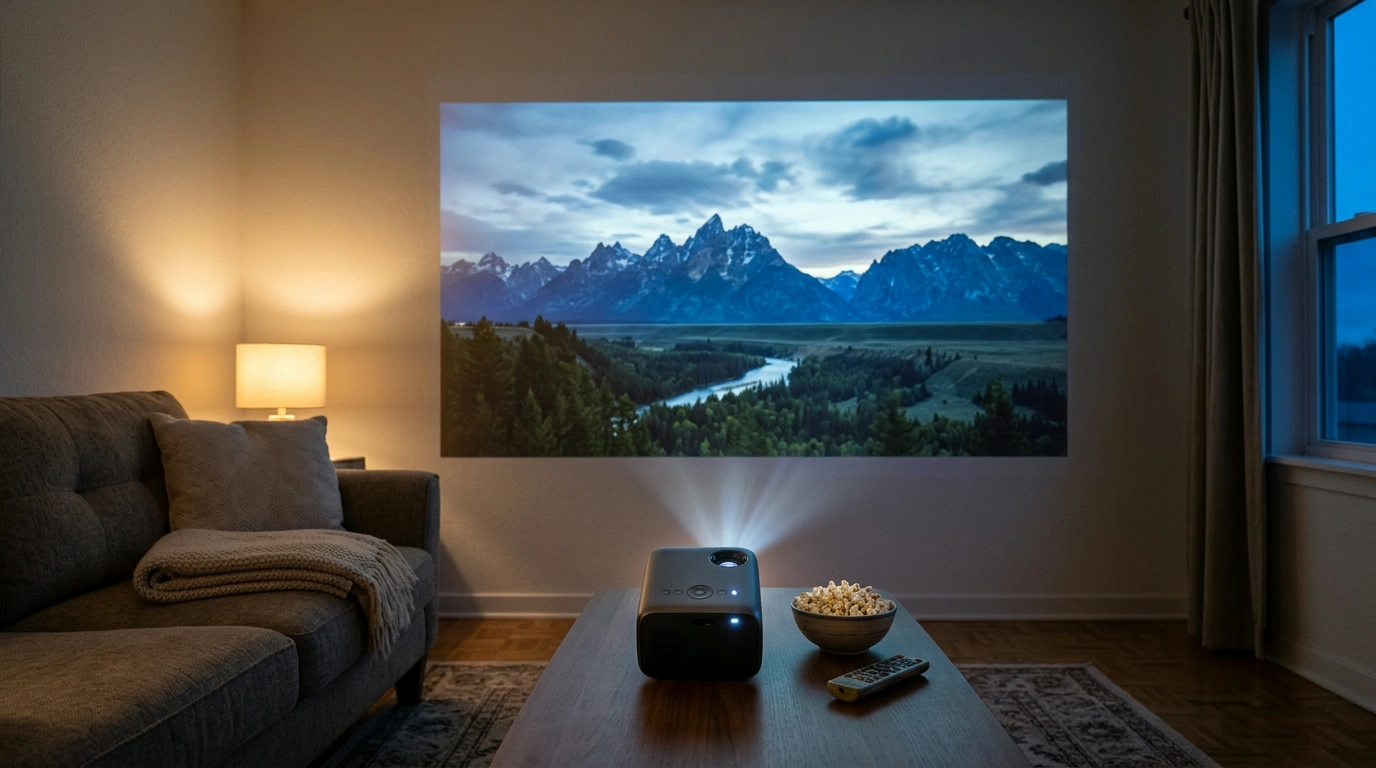
4K Portable Smart Projector with Auto Focus, WiFi 6, Android & Netflix
A portable projector should be fast to set up, easy to stream from, and sharp enough to feel cinematic on a blank wall or screen. This model combines 4K support, auto focus, WiFi 6, and an Android-based smart system with Netflix access for simple, cable-free movie nights at home or on the go.
If you’re ready to skip the TV footprint and still get a big, shareable image, check out the 4K Portable Smart Projector with Auto Focus, WiFi 6, Android & Netflix (currently listed at $323.51, price may change).
Who This Projector Fits Best
- Apartment and dorm setups needing a big screen without a TV footprint
- Travel, backyard, and casual camping movie nights where portability matters
- Families wanting quick, low-fuss focus adjustment for different viewers and rooms
- Gamers and sports fans who want easy casting/streaming plus a large image
- Anyone replacing a basic mini projector and wanting smoother streaming over WiFi 6
What Makes It “Smart” and Convenient
- Auto focus: Helps keep the picture sharp after moving the projector or changing distance—useful for frequent room-to-room use.
- Android-based interface: App-style navigation and streaming access without needing a separate streaming stick (depending on region/app availability).
- Netflix support: Designed to reduce the common headache of incompatibility on budget projectors; confirm sign-in and playback after initial setup. For account and playback troubleshooting, the Netflix Help Center is a reliable reference.
- WiFi 6: Can improve stability in busy networks and reduce buffering when multiple devices share the connection. For a plain-language overview of WiFi 6 (802.11ax), see the Wi‑Fi Alliance Wi‑Fi 6 page.
- Portable form factor: Supports quick setup for temporary screens, blank walls, or ceiling projection with a mount/tripod (if supported by the base).
Picture Quality Basics: 4K Support, Focus, and Room Lighting
- Understand “4K support”: In many portable projectors, “4K support” means it can accept a 4K signal; real-world sharpness depends on the native imaging panel, optics, and focus accuracy.
- Auto focus helps clarity: Subtitles, menus, and fine detail look cleaner—especially after accidental bumps or quick repositioning.
- Lighting matters: For best contrast, use in a dim room. In brighter rooms, consider limiting image size for a punchier picture.
- Size vs. brightness: Larger images typically look dimmer. Finding the right screen size for your room often makes a bigger difference than chasing specs.
- Surface affects color: A neutral-colored wall or simple pull-down screen can improve color consistency for movie nights.
| Situation | What to do | Why it helps |
|---|---|---|
| Bright living room | Reduce image size and close curtains | Higher perceived brightness and better black levels |
| Text looks slightly soft | Let auto focus finish, then re-run focus after moving | Optimizes edge sharpness across the frame |
| Uneven surface/wall texture | Use a projector screen or smoother wall area | Improves detail and reduces distortion |
| Kids/pets bump the table | Use a stable stand/tripod and re-trigger focus | Prevents constant manual refocusing |
Streaming and Connectivity: WiFi 6, Apps, and Inputs
- WiFi 6 is about efficiency: It’s designed to handle congested networks better; placement near the router or a mesh node can further improve stability.
- Apps can vary: Android apps and certification can differ by region—keeping firmware updated helps with compatibility over time. For general platform info, see the Android TV official site (note: specific projector interfaces may differ by device).
- Netflix playback troubleshooting: If you hit playback issues, try updating the Netflix app, updating system software, and re-authenticating the account.
- HDMI fallback: If a preferred app is missing or limited, a dedicated streaming device via HDMI can be a reliable backup.
- Audio upgrades: For larger rooms, external speakers or a soundbar can add impact; connection options (Bluetooth/aux/HDMI audio) depend on projector settings and the connected device.
Simple Setup Routine (5–10 Minutes)
- Placement: Put the projector on a stable surface facing the wall/screen; keep airflow vents unobstructed.
- Power on: Let auto focus complete before judging sharpness; re-run focus after any movement.
- Connect: Join WiFi (preferably 5 GHz / WiFi 6-capable if available) and sign in to streaming apps.
- Geometry: Adjust keystone/fit options if needed; avoid extreme keystone to preserve sharpness.
- Audio check: Test dialog clarity; connect Bluetooth/aux/HDMI audio if supported and desired.
Everyday Use Cases
At-a-Glance Details
| Check | Why it matters | What to confirm |
|---|---|---|
| Streaming needs | App availability can vary | Netflix sign-in/playback and any must-have apps |
| Room lighting | Brightness perception changes fast | Mostly dark room vs. daytime viewing expectations |
| Audio expectations | Built-in speakers vary widely | Ability to connect Bluetooth/HDMI/aux audio if needed |
| Placement | Stability affects focus and alignment | Tripod/mount options and throw distance for your room |
Helpful Add-On (Optional)
If you plan to use the projector for streaming, voice chat, or occasional content creation, a dedicated microphone can clean up audio compared with a laptop’s built-in mic. The RGB USB Gaming Microphone with Noise Canceling & One-Touch Mute is an easy add-on for desktop setups.
FAQ
Does 4K support mean it’s a native 4K projector?
Not always. “4K support” commonly means the projector can accept a 4K input signal, while the native resolution may be lower; perceived sharpness also depends on optics, focus, and image size.
Why does Netflix sometimes not work on some smart projectors?
Netflix playback can fail due to app/DRM certification differences, region-specific app versions, or outdated firmware. Updating the projector system, updating the Netflix app, and signing out/in again often resolves common issues.
Will WiFi 6 improve streaming quality on a projector?
WiFi 6 can improve stability and reduce buffering on busy networks, but results depend on router support, signal strength, and your internet speed. Using 5 GHz and placing the projector closer to your router or mesh node typically helps.














Leave a comment