Gold Stainless Steel Cutlery Set: 16-Piece Luxury Guide
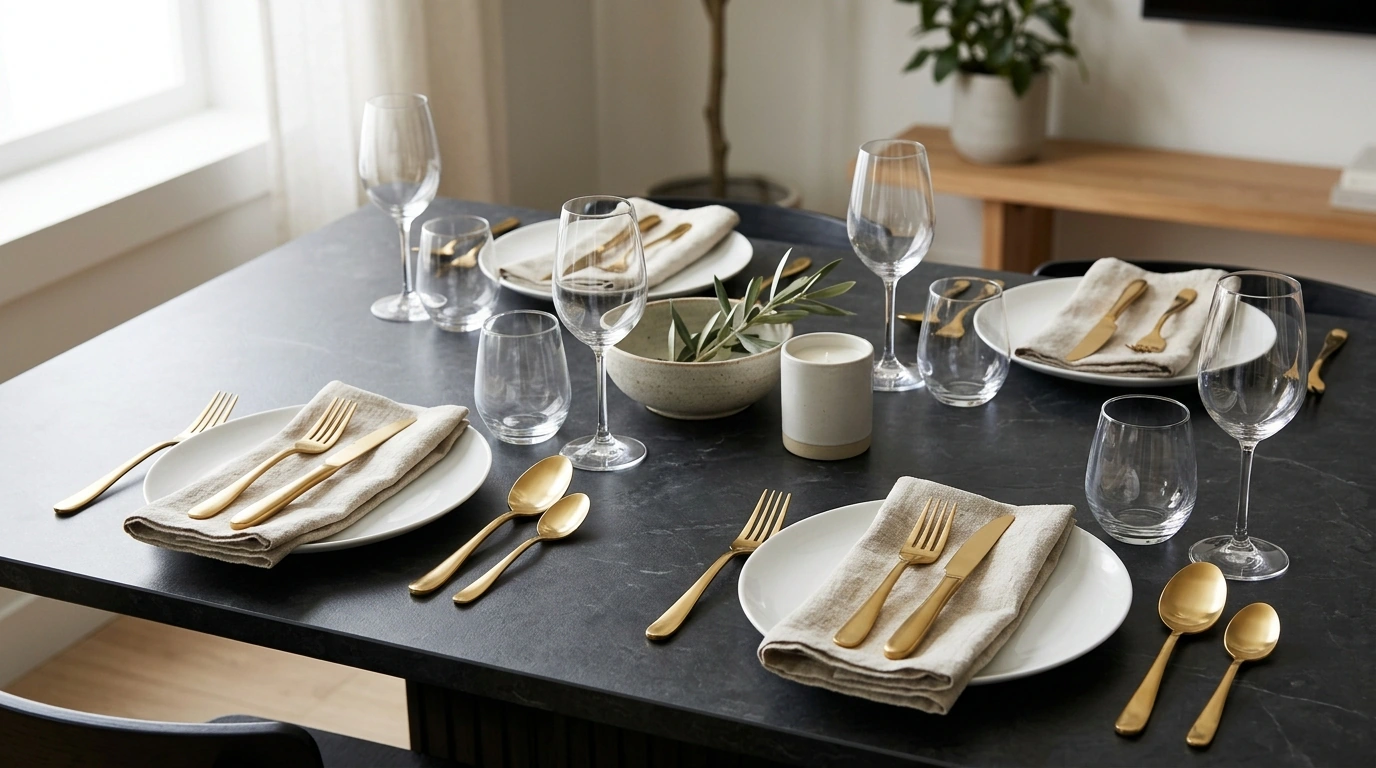
Luxury Gold Stainless Steel Cutlery Set (16 Pieces) for 4 Place Settings
A gold-toned stainless steel flatware set adds instant polish to everyday meals and special occasions. A well-made 16-piece set for four keeps the table coordinated without taking up the drawer space (or budget) of larger bundles. Below is a practical breakdown of what’s typically included, what to look for in quality stainless steel, how gold finishes hold up, and a care routine that helps the set stay bright and photo-ready.
What a 16-piece set for 4 people includes
A “16-piece cutlery set” is usually built around four complete place settings designed for dinner service. The most common mix is straightforward: four dinner forks, four dinner knives, four dinner spoons (tablespoons), and four teaspoons—totaling 16 pieces.
This right-sized bundle works especially well for daily dining, hosting small gatherings, apartment living, and starter-home essentials. It’s also an easy gift upgrade when someone wants their table to look more intentional without committing to a huge set.
Before ordering, confirm the exact piece types and sizes. Some households prefer dessert forks, soup spoons, or steak knives—items that often aren’t included in a basic 16-piece configuration.
At-a-glance details
Gold finish brings a formal, elevated look that pairs beautifully with white porcelain, dark stoneware, and modern minimalist settings. Underneath, stainless steel is valued for corrosion resistance and day-to-day durability compared with softer metals. For households of one to four, a matching set like this covers the essentials for a complete table.
| Feature | Details |
|---|---|
| Total pieces | 16 |
| Place settings | 4 |
| Material | Stainless steel |
| Color/finish | Gold-toned finish |
| Meal coverage | Everyday dinner service (fork/knife/spoons) |
| Best for | Home dining, hosting, gifting |
What makes stainless steel flatware feel “luxury”
Luxury isn’t only about color—it’s about how the pieces feel in the hand and perform during an actual meal. Premium flatware tends to have balanced weight, with a comfortable center of gravity that doesn’t feel tip-heavy or flimsy. That “satisfying heft” is often what makes a set feel more expensive at first touch.
Edge finishing matters too. Smooth, rounded handle edges reduce hand fatigue and feel better during longer meals. Surface quality is another tell: an even finish looks more refined under overhead lighting and candlelight, while inconsistency can make a set look mismatched even if every piece is technically new.
Finally, check the dinner knives. A good dinner knife should cut cleanly through common foods (like chicken, pancakes, or roasted vegetables) without flexing at the tip or feeling overly lightweight. Cohesiveness also counts—matching sheen, color tone, and silhouette across all 16 pieces is what creates that “set” look on the table.
Gold finishes: what to expect over time
Gold-tone flatware is typically stainless steel with a colored coating. Because the color lives on the surface, long-term durability depends on both coating quality and everyday habits.
To help preserve the finish, skip abrasive scrubbers and avoid harsh detergents. Don’t let acidic or salty residues (tomato sauce, citrus, vinegar dressings, brines) sit on the surface for long periods—quick rinsing makes a noticeable difference over time.
Dishwashers can be convenient, but coated finishes often last longer with gentle hand washing. If a dishwasher is used, choose a mild cycle and avoid overcrowding that forces pieces to rub together. Storage also matters: a lined organizer or separating pieces reduces micro-scratches caused by metal-on-metal contact.
If anyone in the household is sensitive to nickel, it’s worth reviewing general allergy guidance and paying attention to how skin reacts to prolonged contact. The CDC provides an overview of nickel exposure and sensitivity concerns here: Centers for Disease Control and Prevention (CDC) — Nickel allergy information. For background on stainless steel as a material, see Encyclopaedia Britannica — Stainless steel.
Care and cleaning routine that protects shine
A simple routine is usually enough to keep gold-toned flatware looking crisp. Rinse promptly after use to reduce staining from salt, acids, and sauces. Wash with a soft sponge and mild dish soap, then dry immediately to prevent water spots.
Avoid chlorine bleach and harsh chemicals; they can damage stainless steel and may shorten the life of surface coatings. If water spots appear, buff gently with a soft microfiber cloth. For stubborn residue, use a non-abrasive cleaner labeled safe for stainless steel and apply it gently rather than scrubbing aggressively.
For entertaining, keep a polishing cloth handy for quick touch-ups before serving—especially if the lighting is bright or the table is set near candles or windows.
For additional context on materials used around food contact surfaces, the FDA’s overview is a helpful reference: U.S. Food & Drug Administration (FDA) — Food Contact Substances.
Styling ideas for a modern table setting
Who this set fits best
Quick buying checklist before ordering
Shop in-stock favorites
- Luxury Gold Stainless Steel Cutlery Set 16Pcs Dinner Flatware for 4 People
- RGB USB Gaming Microphone with Noise Canceling & One-Touch Mute
FAQ
Is gold stainless steel flatware dishwasher safe?
Stainless steel is generally dishwasher safe, but gold-toned coatings often stay nicer longer with gentle washing. If using a dishwasher, use a mild detergent, avoid overcrowding so pieces don’t rub, and dry promptly to reduce spotting.
What pieces usually come in a 16-piece flatware set for 4 people?
Most sets include 4 dinner forks, 4 dinner knives, 4 dinner spoons (tablespoons), and 4 teaspoons. Always verify the product listing to confirm exact piece types and sizes.
How can gold flatware be kept from dulling or scratching?
Use soft sponges, avoid abrasive scrubbers, rinse promptly after meals, and dry immediately. Store pieces so they don’t grind against each other—drawer organizers or lined compartments help reduce micro-scratches.














Leave a comment