Luxury Minimalist Lounge Sofa: Calm Style, Deep Comfort
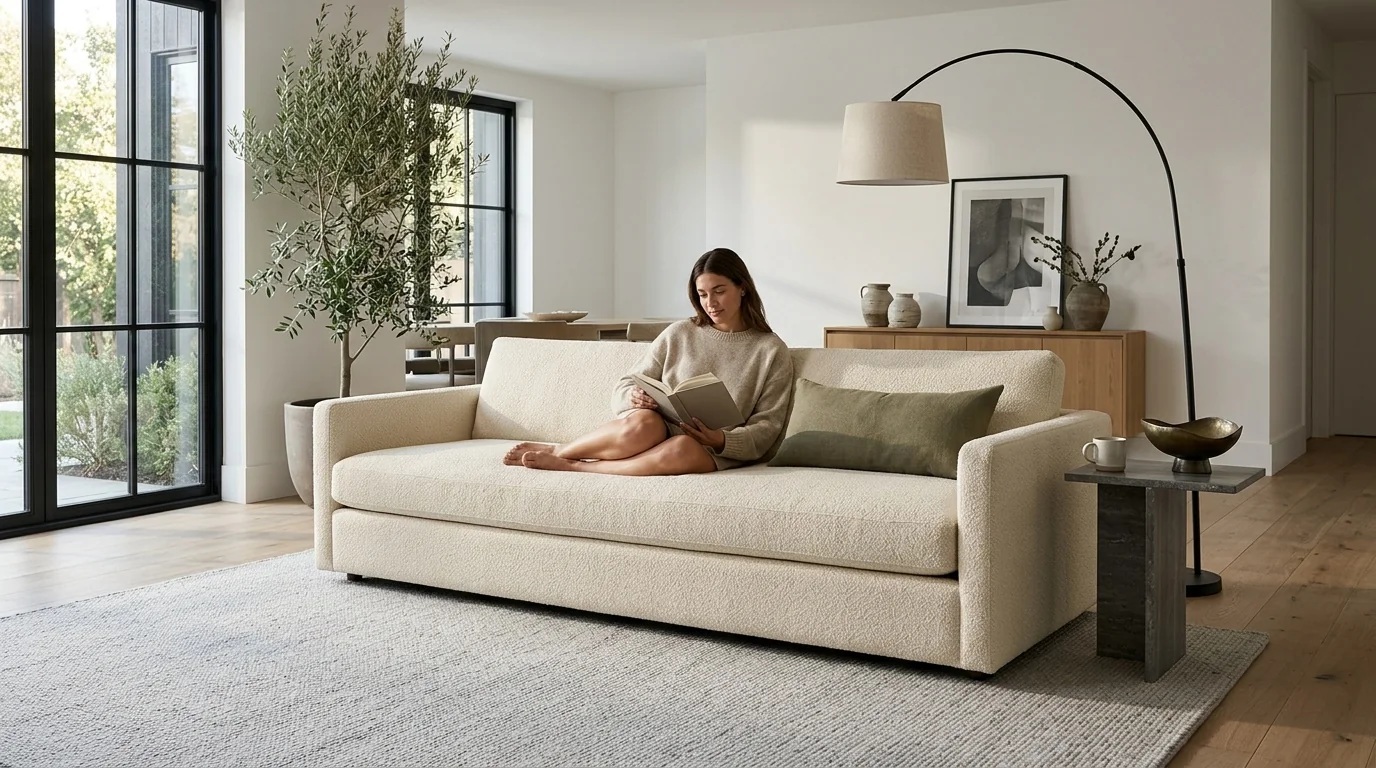
Luxury Minimalist Lounge Sofa
A minimalist lounge sofa should feel calm at first glance and comfortable over long evenings—without bulky shapes or fussy details. The Luxury Minimalist Lounge Sofa is designed to anchor a modern living room with clean lines, a relaxed lounge posture, and a refined presence that pairs easily with neutral palettes, natural textures, and statement lighting.
What sets a minimalist lounge sofa apart
Minimalist lounge sofas do more than “look clean.” They shape how a room reads and how it functions day to day—especially in modern apartments and open-plan homes where the sofa becomes the visual center.
- Low-visual-noise silhouette: Streamlined arms, uninterrupted cushions, and a balanced profile help the room feel open rather than crowded.
- Lounge-first comfort: Deeper seating and a laid-back posture suit reading, movie nights, and casual hosting.
- Easy-to-style foundation: Works with monochrome interiors, warm woods, metal accents, and oversized art without competing for attention.
- A “one strong piece” approach: When the sofa carries the room’s main visual weight, fewer extra furnishings are needed.
Quick look
| Detail | Value |
|---|---|
| Product | Luxury Minimalist Lounge Sofa |
| Price | 1411.99 USD |
| Availability | In stock |
| Current stock | 251 |
| Product page | https://fascinira.com/luxury-minimalist-lounge-sofa/ |
Comfort and support for everyday lounging
Minimalism shouldn’t mean “stiff.” A lounge sofa earns its keep when it feels good for the way people actually use the living room: long sits, casual conversation, and relaxed posture.
- Seat depth and posture: Lounge sofas typically feel more relaxed than upright “formal” seating. Plan for a posture that supports long sessions without constant shifting.
- Cushion feel: The best everyday experience is a balance—enough sink-in comfort to feel inviting, with supportive return so it doesn’t feel drained or flat after frequent use.
- Back support: If the living room doubles as a work-from-sofa zone, a gaming spot, or a long-talk hangout, consider structured throw pillows or lumbar support to keep shoulders and lower back comfortable.
- Arm height matters: Lower arms visually lighten the profile and look more architectural; higher arms can feel more supportive for reading and resting.
If the living room often turns into a game-night setup, pairing a streamlined sofa with a tidy audio accessory can keep the space functional without adding clutter. For example, the RGB USB Gaming Microphone with Noise Canceling & One-Touch Mute suits a clean desk-to-couch flow when a laptop and small side table stand in for a full office.
Materials and finish: the details that create a luxury feel
Luxury minimalism is mostly about restraint—and the quality of what’s left. When the shape is simple, materials and tailoring do all the talking.
- Upholstery texture: Tactile fabrics (bouclé, chenille-like textures, or tight weaves) add depth without relying on busy patterns, keeping the look minimal but not sterile.
- Durability cues: For high-traffic homes, performance-oriented upholstery and tight, consistent weaves help reduce snagging and visible wear over time.
- Frame and structure: A stable frame minimizes squeaks and shifting; reinforced joinery tends to hold up better when the sofa is used daily for lounging.
- Color strategy: Soft neutrals (ivory, sand, taupe, charcoal) keep the form crisp. Darker tones add drama while still reading minimal—especially when paired with matte black or brushed metal accents.
For general furniture performance and safety guidance, it’s worth referencing organizations that shape industry expectations, such as BIFMA and testing standards published by ASTM International.
Sizing and placement: making the room feel intentional
A lounge-scale piece can instantly elevate a room, but it also needs enough space to “breathe.” Placement is what makes minimalism feel curated rather than empty.
- Measure the full pathway: Confirm clearance at doorways, hallways, elevators, and tight turns. A sofa that looks perfect online can become a delivery headache if the route isn’t checked.
- Plan breathing room: Leave comfortable walkways around coffee tables and between the sofa and a media console so the space feels effortless to move through.
- Rug pairing: A larger rug typically makes a minimalist layout feel grounded. A common approach is placing the front legs of the sofa on the rug to visually connect the seating zone.
- Balance with vertical elements: Tall curtains, a floor lamp, or a large artwork counter a low-profile sofa, keeping the room proportionate instead of “flat.”
Styling ideas that keep the look minimal (not empty)
The goal isn’t to remove personality—it’s to edit it. A minimalist lounge sofa looks best when the styling is deliberate and the room has a few strong, quiet decisions.
Care and longevity: keeping a minimalist sofa looking sharp
For broader guidance on healthier indoor environments—especially important in spaces where soft furnishings play a big role—see the EPA’s overview of Indoor Air Quality.
A refined anchor piece for modern living spaces
FAQ
How much space is needed around a lounge sofa?
Plan for comfortable walkways and enough clearance to move around a coffee table without squeezing through. It’s also smart to measure doorways, hallways, elevators, and tight turns ahead of delivery, since lounge sofas often feel best with more open clearance than upright formal seating.
What fabric is easiest to maintain for a minimalist living room?
Tight weaves and performance-oriented upholstery are typically the easiest to live with for frequent daily use. Regular vacuuming, prompt spot cleaning, and managing direct sunlight help keep the fabric looking even and fresh.
How can a minimalist sofa still feel cozy?
Layer comfort through texture rather than busy patterns: add a tactile throw, a couple of structured pillows, a substantial rug, and warm, indirect lighting. Keeping colors restrained while mixing finishes makes the room feel inviting without losing the minimalist clarity.










Leave a comment