Curved Furniture Layouts: Room-by-Room Styling Tips
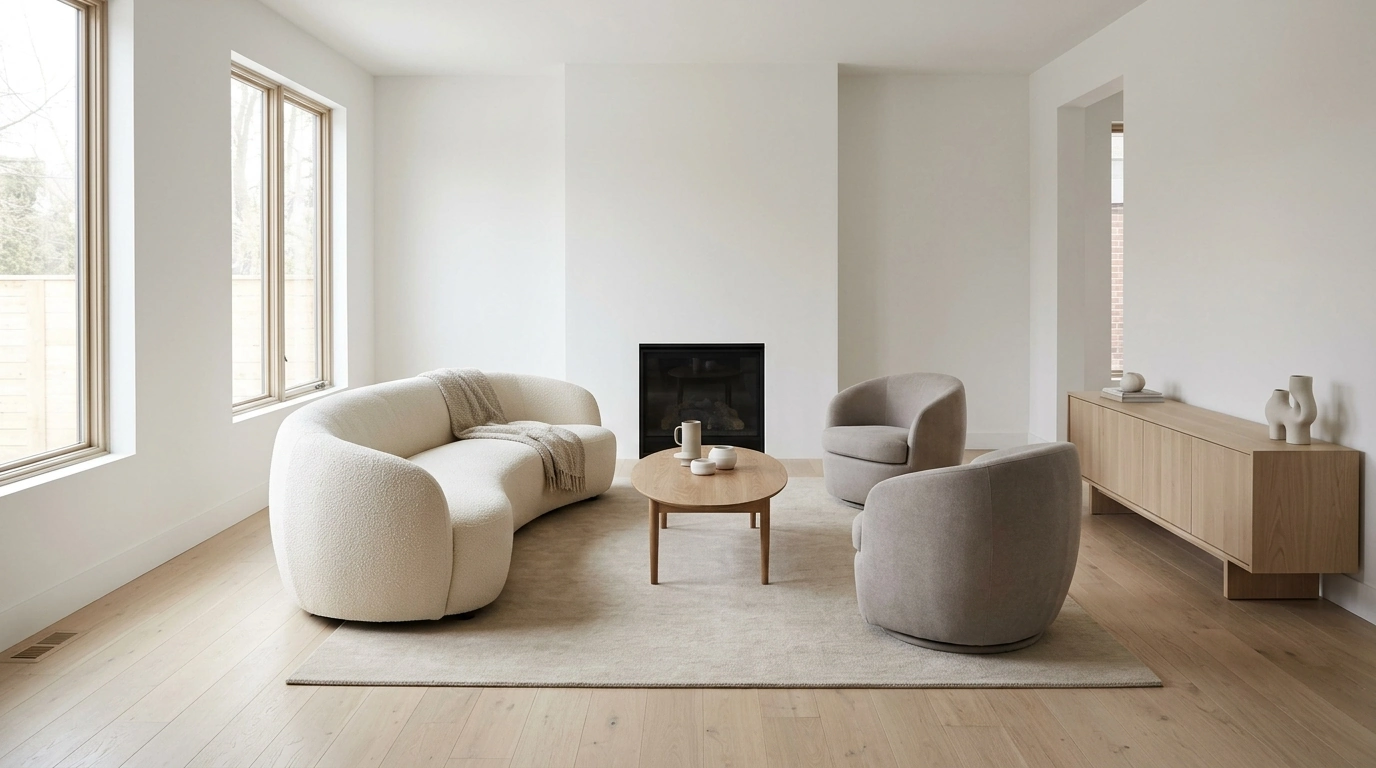
Styling with Curved Furniture: A Room-by-Room Layout Guide
Curved furniture softens hard angles, improves flow through a space, and adds a sculptural focal point. The key is making curves feel intentional—balanced with a few strong straight lines—so rooms don’t look awkward, crowded, or “floaty.” Below is a practical, room-by-room approach to choosing the right silhouettes and placing them with confidence. For more guidance, see [PDF] INTERIOR DESIGN STYLE GUIDE TIPS AND TRICKS.
Why curved pieces change the feel of a room
Rounded silhouettes naturally reduce visual sharpness, which can make a room feel calmer and more welcoming—especially if you have lots of rectangles (windows, cabinetry, rugs, or built-ins). Curves also guide movement and sightlines: people tend to “flow” around an arc more easily than they do around a hard corner, which is helpful in tight pathways and open-plan layouts. For further reading, see [PDF] USER GUIDE FOR INTERIOR DESIGN STEP BY STEP.
Design-wise, curved profiles create a focal point without relying on busy patterns or heavy décor. A sculptural chair back, an arched headboard, or an oval coffee table can carry a room on its own. For the best results, mix curves with a few clean straight lines for structure—think a curved sofa paired with a linear media console, or a round dining table anchored by a rectangular sideboard.
Pick the right curve for the room’s scale
Scale decides whether curved furniture looks elevated or overwhelming. Large rooms can handle bold arcs—curved sofas, sweeping sectionals, or oversized round rugs—without feeling under-furnished. Smaller rooms often do better with compact curves like rounded-back chairs, oval coffee tables, or demilune consoles that keep corners visually and physically clear.
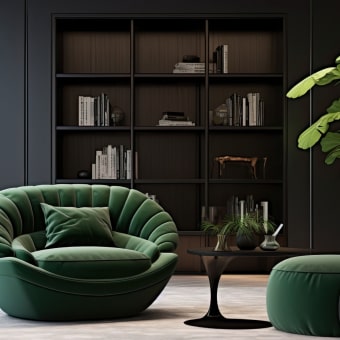
Avoid stacking too many “puffy” silhouettes in one area. Instead, vary the profiles: pair one plush curve (bouclé chair, cloud-like sofa) with one slimmer curve (oval table, arched mirror). If the ceiling feels low, choose pieces with visible legs and a lighter visual footprint to keep the room airy.
| Room size | Pieces that tend to work best | Placement note |
|---|---|---|
| Small (studio/compact) | Oval coffee table, rounded accent chair, arched floor lamp | Keep curves near pathways to prevent sharp bottlenecks. |
| Medium | Curved loveseat/sofa, round dining table, scalloped mirror | Anchor one curved hero piece and repeat the curve 1–2 times. |
| Large/open plan | Curved sectional, large round rug, curved console, banquette | Use curves to define zones; maintain straight edges elsewhere for order. |
Placement rules that prevent awkward gaps
Start with circulation before you commit to angles. In many homes, a comfortable walkway is about 30–36 inches—so sketch the main paths (entry to sofa, kitchen to dining, hallway to bedroom) and protect that space first.
Next, use a “tangent rule”: let one curved piece gently align with a straight edge—like the border of a rug, the line of a fireplace, or the face of a console. That small alignment trick makes the curve feel deliberate rather than randomly floated.
Finally, watch for crescent-shaped dead space. Curved seating often creates a hollow gap that looks empty if it’s placed as far back as a straight sofa would be. Pull the curve slightly closer to the coffee table or center point, and keep the spacing consistent around round and oval tables so the negative space doesn’t become lopsided.
Living room layouts that highlight curves
1) Curved sofa as the hero
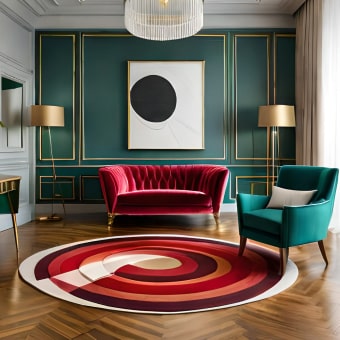
Face the curved sofa toward a focal point (fireplace, media wall, or a strong view). Pair it with an oval coffee table to echo the line, then add one or two straight-edged pieces—like a rectangular rug or a boxy media console—to keep the room grounded.
2) Two-chair curve for better conversation
3) Rug strategy: soften or structure
For additional living-room inspiration and spacing checks designed specifically for curved silhouettes, the Styling with Curved Furniture interior styling guide (digital download) is a practical reference for layouts that look intentional.
Dining spaces: round tables, curved banquettes, and everyday comfort
Lighting matters here: a centered pendant reinforces the symmetry of a round table. A round or softly contoured fixture typically looks best. If your room is rectangular, an oval rug under a round table can visually bridge the shapes and make the zone feel purpose-built. For more dining-room styling ideas, resources like Architectural Digest and The Spruce often showcase real-world layouts that demonstrate how curved dining pieces improve flow.
Bedrooms and entryways: subtle curves with big impact
Balance: mixing curves with straight lines, texture, and color
A printable plan for confident curved furniture placement
If you want step-by-step layouts, spacing checks, and room-by-room examples built around curved silhouettes, the Styling with Curved Furniture | Interior Styling Guide (Digital Download) walks through living rooms, dining areas, bedrooms, and small-space problem solving in a format that’s easy to reference while you measure and rearrange.
For a separate at-home upgrade while you plan, consider the RGB USB Gaming Microphone with Noise Canceling & One-Touch Mute for clear calls when coordinating with movers, contractors, or long-distance family during a refresh.
FAQ
How many curved pieces should be in one room?
A good balance is one main curved “hero” piece and 1–2 smaller repeats (like a mirror, lamp, or side table). Keep the remaining pieces more linear so the room still feels structured.
Do curved sofas work in small living rooms?
Yes—if circulation stays clear and the sofa is scaled appropriately. Pair it with an oval coffee table, keep adjacent pieces visually light (visible legs), and avoid adding multiple bulky curved items right next to it.
What rug shape works best with curved furniture?
Round rugs emphasize softness and flow, while rectangular rugs add structure and contrast. Choose the shape based on whether your room needs more movement (round) or more grounding (rectangular).











Leave a comment