26.7in Bladeless Fandelier: Low-Profile Fan + Light
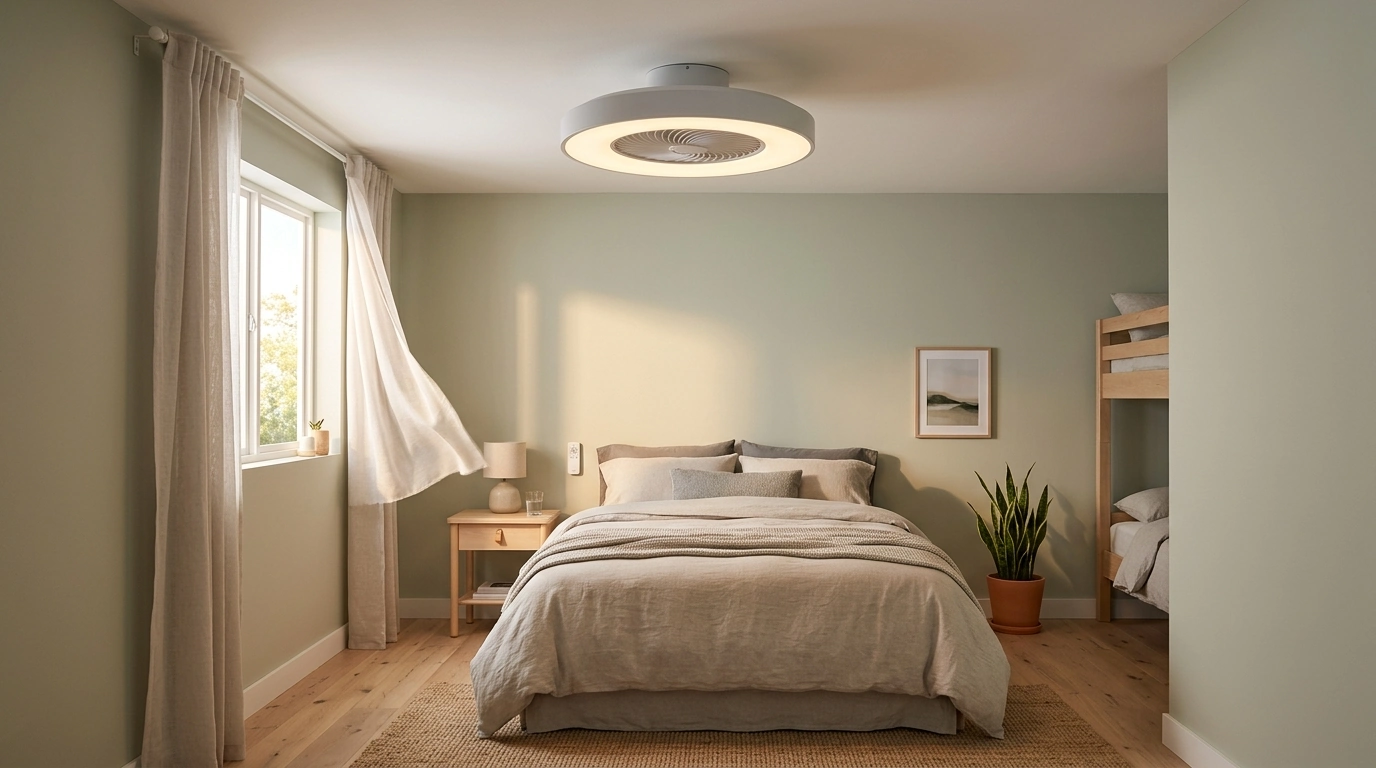
26.7in Bladeless Ceiling Fan with Light and Remote: Low-Profile Modern Fandelier Guide
A low-profile bladeless fandelier can combine lighting and airflow in rooms where traditional fan blades feel too bulky, loud, or risky around bunk beds, low ceilings, or active kids. This guide breaks down what to look for, how a 26.7-inch model fits typical spaces, and what to expect from installation, daily use, and maintenance. For more guidance, see 42″ Crystal Retractable Ceiling Fan with Light and Remote ….
What a Bladeless Fandelier Is (and Why It’s Different)
A fandelier blends a ceiling fan and a chandelier-style light fixture into one compact, design-forward unit. Instead of long exposed blades, a “bladeless” look typically means the fan components are enclosed behind a diffuser or integrated into a ring, aiming for a cleaner silhouette and fewer visible moving parts.
Homeowners often choose this style for modern décor, a softer visual footprint, and easier wipe-down cleaning compared with dust-prone blades. Another common motivation is perceived safety: while it’s not a substitute for proper mounting and electrical practices, reducing access to spinning parts can feel more comfortable in kids’ rooms or spaces with bunk beds.
Quick Specs and Room Fit for a 26.7-Inch Low-Profile Model
Diameter is the first reality check. A ~26.7-inch fixture is usually best for small rooms—cozy bedrooms, compact nurseries, home offices, hallways, laundry rooms, and breakfast nooks—where a large ceiling fan would dominate the ceiling and visually “shrink” the space.
Low-profile mounting helps when ceiling height is limited or when a close-to-ceiling look is preferred. It can also simplify planning in rooms with only one junction box: you get both light and circulation without adding a second fixture.
| Room size | Common fan diameter range | What to verify before buying |
|---|---|---|
| Small (up to ~100 sq ft) | 20–30 in | Ceiling height, light brightness needs, and whether airflow is sufficient |
| Medium (~100–200 sq ft) | 30–44 in | If choosing ~26.7 in, prioritize placement and expectations for gentle circulation |
| Low-ceiling rooms | Low-profile/flush options | Blade clearance isn’t the only factor—confirm overall fixture height and code requirements |
Light + Remote Control: What to Expect Day to Day
Remote control is more than a convenience—it can be the easiest way to manage an integrated LED light and fan without relying on wall dimmers that may not play nicely with certain LEDs. Day to day, remote operation is especially helpful in bedrooms and nurseries, where adjusting brightness or fan speed from bed is a genuine quality-of-life upgrade.
When evaluating the lighting experience, focus on practical behaviors: stable brightness, comfortable color tone, and no noticeable flicker during normal use. If the fixture offers multiple fan speeds or light modes, it helps to build simple routines—brighter light for cleaning and work, softer settings for evenings, and a lower, quieter fan speed for sleep.
Airflow and Comfort in Real Rooms
Bladeless-style units are often selected for gentle circulation rather than the punchy breeze of oversized blade fans. In real rooms, that gentle movement can be exactly what’s needed: it mixes conditioned air, reduces hot/cold pockets, and keeps the space from feeling stuffy without creating a “wind tunnel” effect.
Placement matters. A centered installation typically spreads airflow more evenly, while an off-center location can leave corners stagnant. For year-round comfort, many households run ceiling fans in both warm and cool seasons to improve perceived temperature so HVAC settings can feel more effective. For broader efficiency guidance, see the U.S. Department of Energy’s ceiling fan tips at energy.gov and ENERGY STAR’s overview at energystar.gov.
Installation Notes for Low-Profile Ceiling Fans with Lights
Before ordering any ceiling fan, confirm the ceiling electrical box is rated for fan support. A standard light-only box may not be designed for dynamic loads and vibration. Always turn off power at the breaker and verify with a tester before handling wiring.
Wall switch compatibility is another common snag: many integrated LED fixtures are intended to be controlled by the included remote and can flicker or malfunction when connected to older-style dimmers. When in doubt—especially if you’re unsure about wiring, fan-rated boxes, or local code requirements—hire a licensed electrician for a safer, cleaner install.
Maintenance, Cleaning, and Longevity
Who This Style Fits Best
Featured In-Stock Picks
Low-profile lighting + airflow
26.7in Bladeless Ceiling Fan with Light and Remote, Low Profile Modern Fandelier — a compact option for small rooms that need a cleaner ceiling profile without giving up both light and circulation.
For a refreshed home office setup
RGB USB Gaming Microphone with Noise Canceling & One-Touch Mute — a simple add-on if you’re upgrading a small office where comfortable airflow and clearer calls go hand in hand.
FAQ
Is a bladeless ceiling fan safer than a traditional fan?
Enclosed or hidden fan components can reduce direct exposure to spinning blades, which many households prefer in kids’ rooms or tight spaces. Safety still depends on correct installation, a fan-rated ceiling box, and secure mounting, and it doesn’t remove standard electrical safety requirements.
Can a remote-controlled ceiling fan with LED light be used with a wall dimmer?
In many cases, it’s best to avoid standard wall dimmers unless the fixture specifically states it supports dimming via wall control. Incompatible dimmers can cause flicker, buzzing, or unreliable operation, while the included remote is typically the intended control method.
What room size is best for a 26.7-inch low-profile fandelier?
This size is usually ideal for small rooms and compact spaces where a larger fan would look overpowering. It can work in medium rooms for gentle circulation, but expectations should match the smaller diameter and more subtle airflow.















Leave a comment