AI Bedtime Stories: Calm, Parent-Led Prompts & Formula
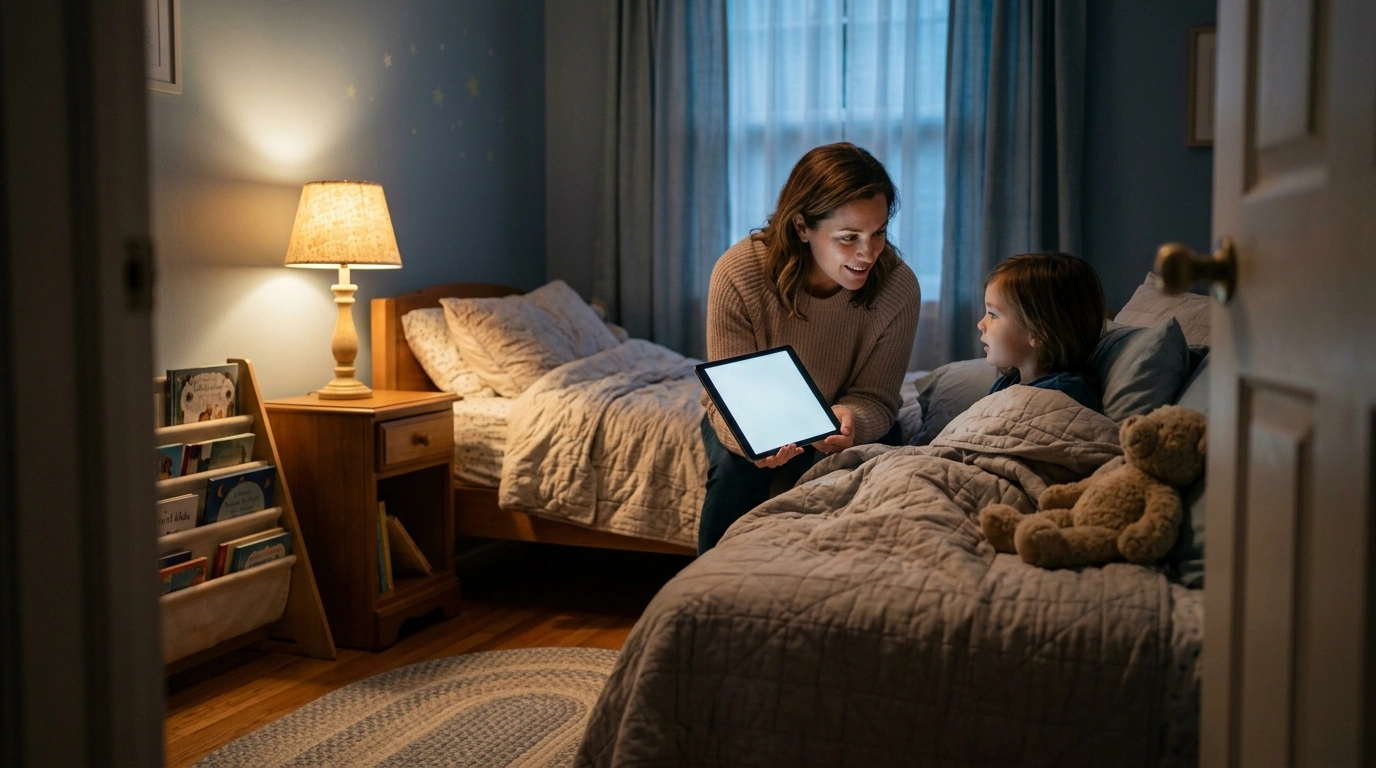
Why AI Fits Bedtime Storytelling (When Adults Stay in Charge)
Bedtime stories land best when they feel safe, familiar, and lovingly paced. AI can support that goal by generating quick ideas—characters, settings, gentle plot turns—so adults can focus on what matters most: connection, comfort, and a calm emotional arc.
Think of AI as a brainstorming assistant, not the storyteller-in-chief. A caregiver’s judgment is what keeps content age-appropriate, values-aligned, and bedtime-friendly. That means skipping scary imagery, intense cliffhangers, or overstimulating humor close to lights-out, and choosing language that settles the nervous system instead of revving it up.
Personalization becomes easier, too. Favorite animals, familiar places, and family routines can show up as story ingredients without turning bedtime into a performance. If you’d like guidance that keeps the process parent-led, Spark Imagination with AI for Bedtime Stories – Guide for Parents & Creators offers a structured approach for building soothing, repeatable story routines.
A Simple Bedtime Story Formula That Works Every Night
A consistent structure helps kids relax because the shape of the story becomes predictable—even when the details change. This five-part formula stays cozy while still feeling “new.”
- Start with a familiar setting: home, school, a cozy forest cabin, or a magical library.
- Introduce one gentle problem: a lost toy, a nervous new friend, a quiet thunderstorm, or first-day jitters.
- Add one helper: a kind animal, a wise lamp, a patient robot, or a friendly cloud.
- Resolve with a soothing lesson: courage, patience, kindness, curiosity, or gratitude.
- Close with a wind-down scene: warm blankets, starlight, soft music, deep breaths, and a sleepy goodbye.
Keep stakes low. “Will the teddy get back to the pillow?” is plenty. The goal is a gentle arc that ends in safety, not suspense.
Age-Aware Tone and Content Guardrails
Small changes in sentence length, pacing, and intensity make a big difference at bedtime. When using AI-generated drafts, these guardrails help you quickly adjust the story to fit your child’s stage and sensitivities.
- Ages 2–4: short sentences, repetition, concrete imagery, minimal suspense, familiar routines.
- Ages 5–7: simple quests, playful dialogue, mild tension with quick reassurance.
- Ages 8–10: richer plots, humor, problem-solving, clearer themes; keep endings soft for bedtime.
- Sensitive sleepers: reduce conflict, avoid villains, swap “danger” for “misunderstanding,” emphasize safety cues.
- Neurodivergent-friendly options: predictable structure, clear transitions, fewer characters, calm sensory language.
Bedtime Story Settings, Themes, and Calming Endings
| Story setting | Gentle theme | Calming ending idea |
|---|---|---|
| Moonlit garden | Trying something new | A tiny seed grows as everyone breathes slowly and says goodnight |
| Quiet train ride | Patience | The train arrives at a cozy station with warm cocoa and soft seats |
| Undersea library | Curiosity | A librarian octopus dims lanterns and closes the book with a lullaby |
| Cloud village | Friendship | Clouds settle into pillow shapes and drift into sleep |
| Friendly robot workshop | Confidence | The robot powers down gently while the room glows like a night-light |
Turning Everyday Moments Into Story Seeds
The easiest way to make a story feel personal is to start with something real from the day. It can be tiny: a lost sock, a new word, a playground moment, or a pet’s funny habit. Then add one “what if” twist.
- Observe one real detail: “We couldn’t find the blue sock.”
- Choose a gentle twist: “What if the sock is a traveler who misses home?”
- Keep the cast small: one main character + one helper + one gentle obstacle is often enough.
- Reuse beloved elements: recurring characters and locations build comfort and anticipation.
- Invite participation: let your child name a character, pick a color, or choose a tiny plot detail.
Recurring “bedtime friends” (a lantern that speaks softly, a shy star, a calm robot) can become part of the nightly routine—especially helpful on travel nights or when everyone’s tired.
A Safe, Repeatable Workflow for AI-Assisted Stories
A simple workflow keeps AI output aligned with your family’s boundaries while saving time.
For healthy sleep habits that support a smoother bedtime routine overall, the American Academy of Pediatrics offers practical guidance on kids’ sleep routines and recommendations.
Ideas That Keep Kids Engaged Without Waking Them Up
If you’re exploring AI with kids, Common Sense Media’s Parents’ Guide to AI is a helpful reference for setting expectations and keeping tech use age-appropriate.
For Creators: Shaping AI Drafts Into a Cohesive Digital Story
If you record read-alouds or create audio versions, a reliable mic can reduce distractions and keep a soothing tone consistent. The RGB USB Gaming Microphone with Noise Canceling & One-Touch Mute can be a practical option for clearer narration (especially in rooms with background noise).
Digital Storytelling eBook for Inspired Nights
When the day has been long, having a repeatable method matters. Spark Imagination with AI for Bedtime Stories – Guide for Parents & Creators is designed for caregivers and creators who want a parent-led approach to AI-assisted storytelling, with frameworks for gentle plot arcs, calming endings, and consistent routines that work night after night.
FAQ
Is it okay to use AI for bedtime stories?
Yes—AI can help with ideas and first drafts, but an adult should review and adjust the story for age-appropriateness, tone, and sensitive content. The most important part of bedtime stories is still the human-led bonding and read-aloud experience.
How can stories stay calming instead of exciting?
Use gentle stakes, a predictable structure, and fewer characters, then slow the pacing in the last third. Reassuring language, clear safety cues, and a wind-down ending with repetition help signal rest.
What details make a story feel personalized?
Add a child’s favorite animals, colors, interests, familiar places, and one small real-life moment from the day. Keep personalization light and comforting so it feels cozy rather than intense or complicated.
















Leave a comment